At Sceye, we’re opening up access to a new layer of infrastructure, above drones and below satellites. From this unique vantage point in the stratosphere, our HAPS can connect people, monitor the planet, and help protect it.
But what exactly are HAPS?
We know it’s a bit of a mouthful, but HAPS stands for High-Altitude Platform Systems, or more simply put – stratospheric platforms. It’s a term originally coined by the U.S., European, and Japanese space agencies to describe what operates in the vast space above the atmosphere at 20 kilometers and below the Karman line (space) at 100 kilometers.
The concept of HAPS is not new. But technology and material science advances are what make them possible today. Like much of today’s aerospace technology, HAPS initial development was driven (and funded) through governments in the lens of geopolitical activity. The difference is today, the primary funding is driven by commercial interest in connectivity, advanced by major global telecom companies.
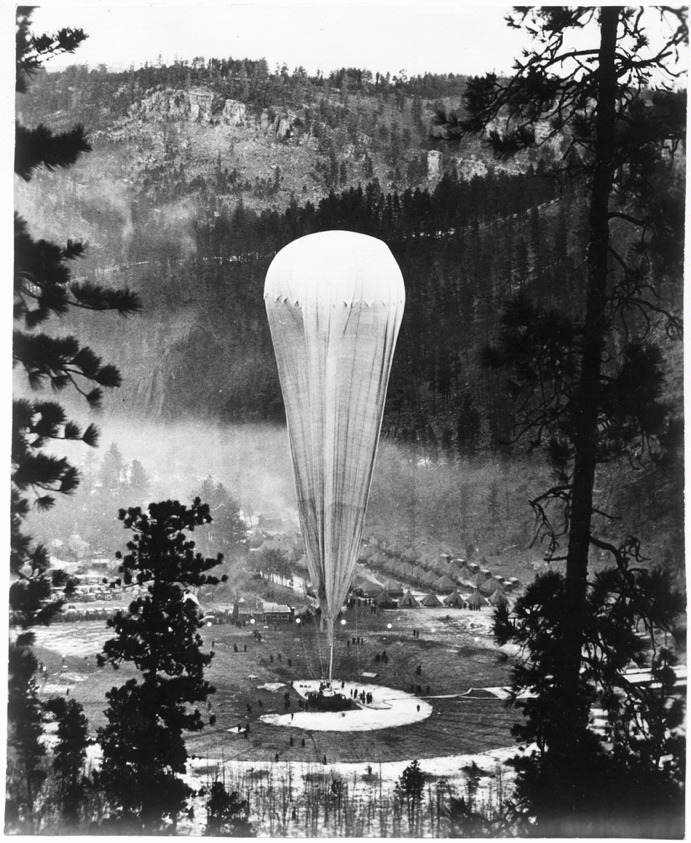
Stratospheric platforms first emerged in the 1930s with balloon ascents that demonstrated how scientific payloads could survive briefly in the harsh conditions of the stratosphere. This technology became of interest to militaries during and after World War II, but the platforms were significantly limited by not being able to maintain precise locations or stay aloft for long durations.
Come the Cold War, defense planners first studied station-keeping aircraft and lighter-than-air (LTA) concepts that could serve as persistent communication nodes and radar platforms. NASA and the U.S. Air Force tested these long-duration high altitude platforms, but energy limitations – including nascent solar cells, batteries, and heavy fabric materials, prevented early HAPS from succeeding. But the foundational understanding of aerodynamics, solar power, and composite materials began to take shape.
In the 1990s we saw our first technological breakthroughs that proved the fundamental feasibility of stratospheric platforms, including lightweight composites, improved photovoltaic cells (more power at higher altitudes), and advances in autonomous flight systems.
Enter the 2000s, the rise of telecom, and the maturing vision of stratospheric platforms. The United States continued to spend big money with the ‘big primes’ without much result, and we saw Japan and Europe throwing their hat in the HAPS ring. Come 2010-2020, several HAPS companies emerged – including Sceye, in parallel with advances in materials science. One example is with the material, graphene. Graphene was only discovered in 2004, and this material helped significantly optimize hull fabric (performance relative to weight), batteries, and solar panels.
Just as low-Earth orbit became a thriving environment for commercial activity, the stratosphere is now ready for prime time – complementing, amplifying, and even possibly surpassing existing ground and space infrastructure.
Sceye was proudly self-funded until our first stratospheric flight, proving that this technology is now possible. In 2024, Sceye became the first company to complete a full diurnal cycle,maintaining both altitude and location in the stratosphere through a day-night cycle, powered solely by renewable energy. This means our platforms can now operate like geostationary satellites, only 1,800 times closer to Earth and at a fraction of the cost. Unlike drones, we stay up and unlike satellites, we stay in one place.
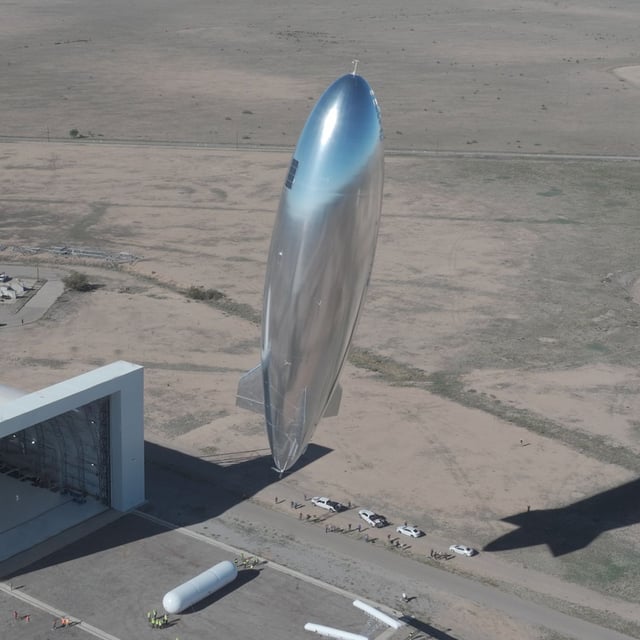
At this altitude, Sceye HAPS can connect directly to cell phones, backhaul into existing networks, offer FCC-defined broadband capacity, and deliver hyperspectral imaging detailed enough to detect methane leaks with sub-meter precision. Importantly, HAPS are the key factor for 6G, allowing for a ubiquitous mesh network that connects billions.
And why the stratosphere?
To understand why the stratosphere is so powerful, it helps to think about the three layers of infrastructure that serve our planet:
- Terrestrial (Ground): Cell towers, fiber optics, and Wi-Fi deliver connectivity for the densest of populations (>100 ppl/km2), but they’re limited by geography and cost.
- Stratospheric (Air): HAPS fill the gap between the ground and space. They can hover over a region for extended periods, providing high-speed, direct-to-device connectivity and real-time high-resolution observation without the latency or cost of satellites. The stratosphere enables the middle layer of connectivity infrastructure, bridging the gap for semi-urban and populated areas.
- Space: Satellites offer global reach but can’t provide persistent coverage for significant populations, and they’re expensive to launch and maintain. Satellites are best where connectivity requirements are for remote users (<2 ppl/km2). This is a direct result of physics – signal loss in free space increases by the square of the distance traveled, meaning the higher the antenna altitude, the lower the population density it can serve.
The stratosphere offers the optimal vantage point: close enough for high-capacity connectivity and observation, yet high enough for wide-area reach. Importantly, the stratosphere offers space-like conditions without the cost of being in space and the disadvantages of being in orbit.
By opening access to the stratosphere, Sceye is building a sustainable, scalable, and resilient new layer of infrastructure that bridges the gap between the terrestrial and space layers to better connect and protect life on Earth.